

★★★★★
They did a great job! They were thorough with every part of the process. Would definitely recommend!
This guide collects the per-service Chicago masonry cost ranges that show up on 312 Masonry quotes — tuckpointing, brick repair, restoration, commercial facade and brick pavers — with the factors that move the number up or down, the neighborhood spread, and the Chicago Facade Ordinance scope that drives larger jobs. Final cost confirmed after a 48-hour on-site visit.
| Scope | Range |
|---|---|
| Spot repointing (small-area minimum) | $1,500–$4,500 |
| Residential brick or greystone | $8–$22 per sq ft |
| Two-flat / row house (partial wall) | $10–$28 per sq ft |
| Commercial / swing-stage facade | $20–$45 per sq ft |
| Scope | Range |
|---|---|
| Spot brick replacement (per brick) | $30–$80 |
| Crack repair (epoxy or stitch) | $300–$1,200 per crack |
| Wall section / partial rebuild | $1,500–$6,000 |
| Brick step & porch rebuild | $2,500–$12,000 |
| Cause-fix (flashing, downspout, lintel) | priced separately |
| Scope | Range |
|---|---|
| Wall cleaning (chemical / mild abrasive) | $4–$12 per sq ft |
| Cleaning + gentle repointing | $14–$32 per sq ft |
| Partial rebuild + matched replacement | $40–$120 per sq ft |
| Full facade restoration | $100–$250+ per sq ft |
| Test panels (start-of-job) | $1,500–$6,000 |
| Scope | Range |
|---|---|
| Facade Ordinance critical exam (engineering) | $4,000–$15,000 |
| Lintel replacement (residential ground) | $450–$1,200 per opening |
| Lintel replacement (upper floor / scaffold) | $800–$1,800 per opening |
| Lintel replacement (commercial / swing-stage) | $1,500–$4,500+ per opening |
| Parapet rebuild (per linear foot) | $180–$450 |
| Commercial tuckpointing (swing-stage) | $20–$45 per sq ft |
| Full facade restoration | quoted per project |
| Scope | Range |
|---|---|
| Patio install (clay or concrete pavers) | $22–$42 per sq ft |
| Walkway install | $20–$38 per sq ft |
| Driveway install (concrete pavers + heavy base) | $25–$50 per sq ft |
| Retaining wall (per face sq ft) | $60–$160 |
| Stone veneer | quoted per project |
| Neighborhood | Dominant trade | Tuckpointing range |
|---|---|---|
| Lincoln Park | Greystone + limestone band | $14–$28 per sq ft |
| Lakeview | Three-flat common brick | $8–$22 per sq ft |
| Logan Square | Boulevard house / cottage | $8–$28 per sq ft |
| Lincoln Square | Bungalow / six-flat | $8–$25 per sq ft |
| Old Town | Triangle preservation | $18–$40 per sq ft |
| Bucktown | Industrial loft / cottage | $8–$30 per sq ft |
| Wicker Park | Mansion / Painted Lady | $8–$50 per sq ft |
Tuckpointing range only; other trades (restoration, commercial, pavers) follow service-level pricing above.
A Chicago Department of Buildings permit is generally not required for tuckpointing or repointing on a single-family, two-flat or three-flat residential building. The work is treated as routine maintenance under most circumstances.
312 Masonry handles the city paperwork on jobs that need it. On most residential repointing, no permit application is necessary — the trade goes straight to the scope.
The Chicago Facade Ordinance (Municipal Code 13-196-031, in force since 1996) requires the exterior walls and appurtenances of buildings 80 feet tall or above — roughly seven to eight storeys and up — to be inspected on a recurring critical-exam cycle by a licensed Illinois structural engineer or architect. The critical-exam interval is not a single number; it runs 4 to 12 years depending on facade category.
| Facade category | What it means | Cycle |
|---|---|---|
| Category I | Non-corroding metal armature or no metal in the wall | Every 12 years |
| Category II | Protected or corrosion-resistant metal armature | Every 8 years |
| Category III | Corroding metal — unprotected steel angle iron, embedded steel | Every 4 years |
An Ongoing Inspection is required between critical exams. Older Chicago masonry with unprotected steel lintels typically falls into Category III on the 4-year cycle; terracotta facades also lean toward the more frequent end.
Cost ranges driven by the Ordinance:
| Scope | Range |
|---|---|
| Critical exam (engineering) | $4,000–$15,000 |
| Lintel replacement (per opening, swing-stage) | $1,500–$4,500+ |
| Parapet rebuild (per linear foot) | $180–$450 |
| Swing-stage tuckpointing | $20–$45 per sq ft |
Same-day reply during business hours. A close-up photo speeds the visit.
The crew lead reads the wall, measures, identifies failure modes and access.
Mortar samples taken where matching is required; scope and price range written.
Line-item scope with quantities, materials and ranges in your inbox same day or next.
Real reviews from our Google and Yelp profiles — read them all, or leave your own.
They did a great job! They were thorough with every part of the process. Would definitely recommend!
Restoration on my building. Chicago common brick moisture damage and tuck pointing of the side wall.
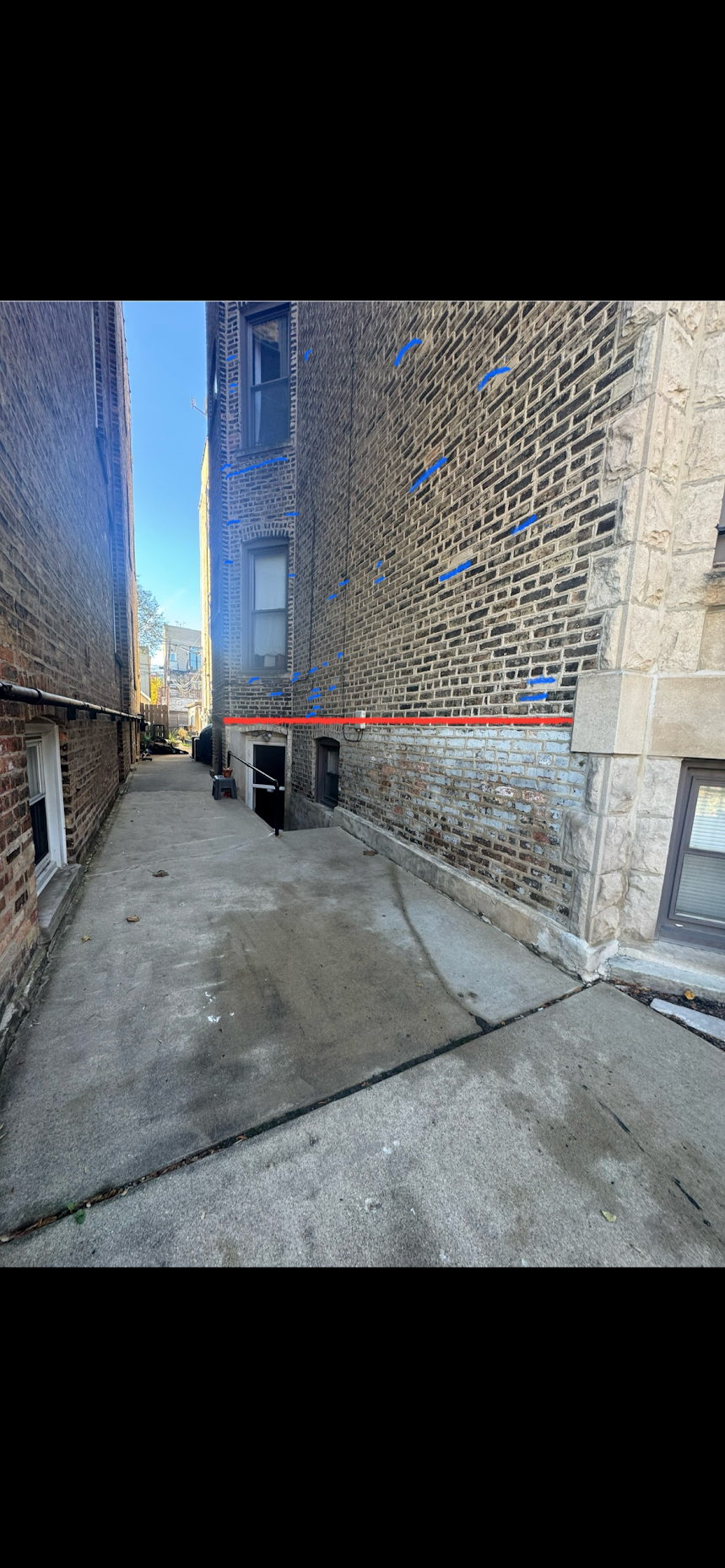
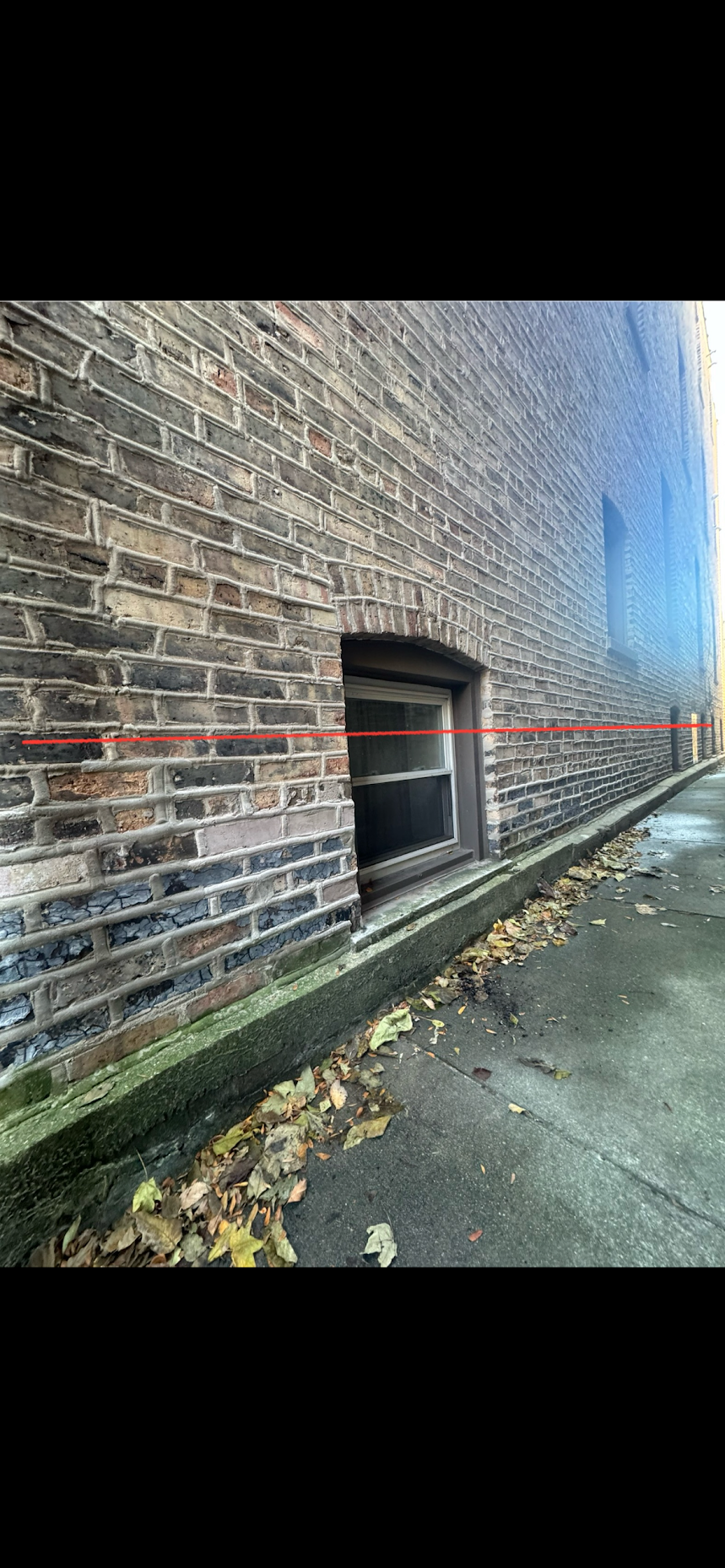
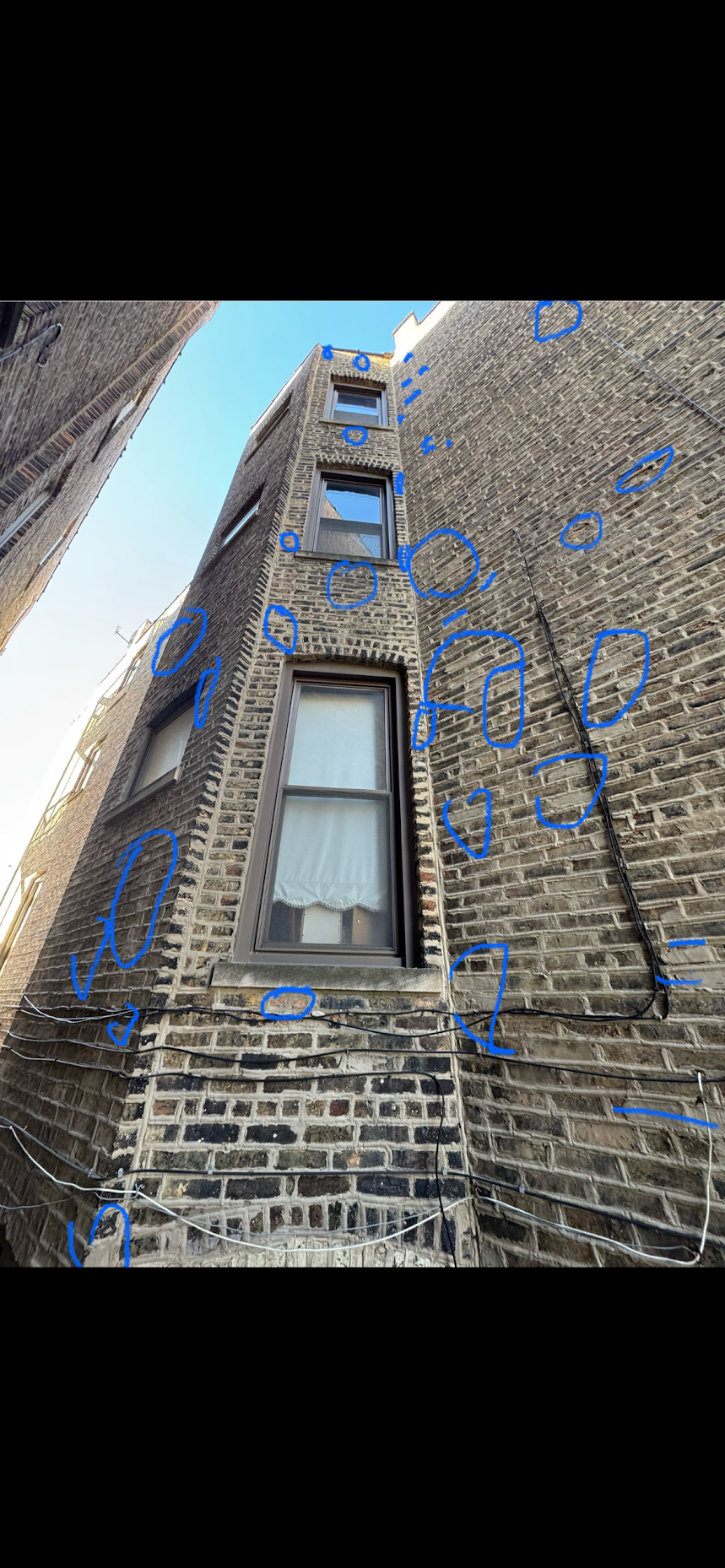
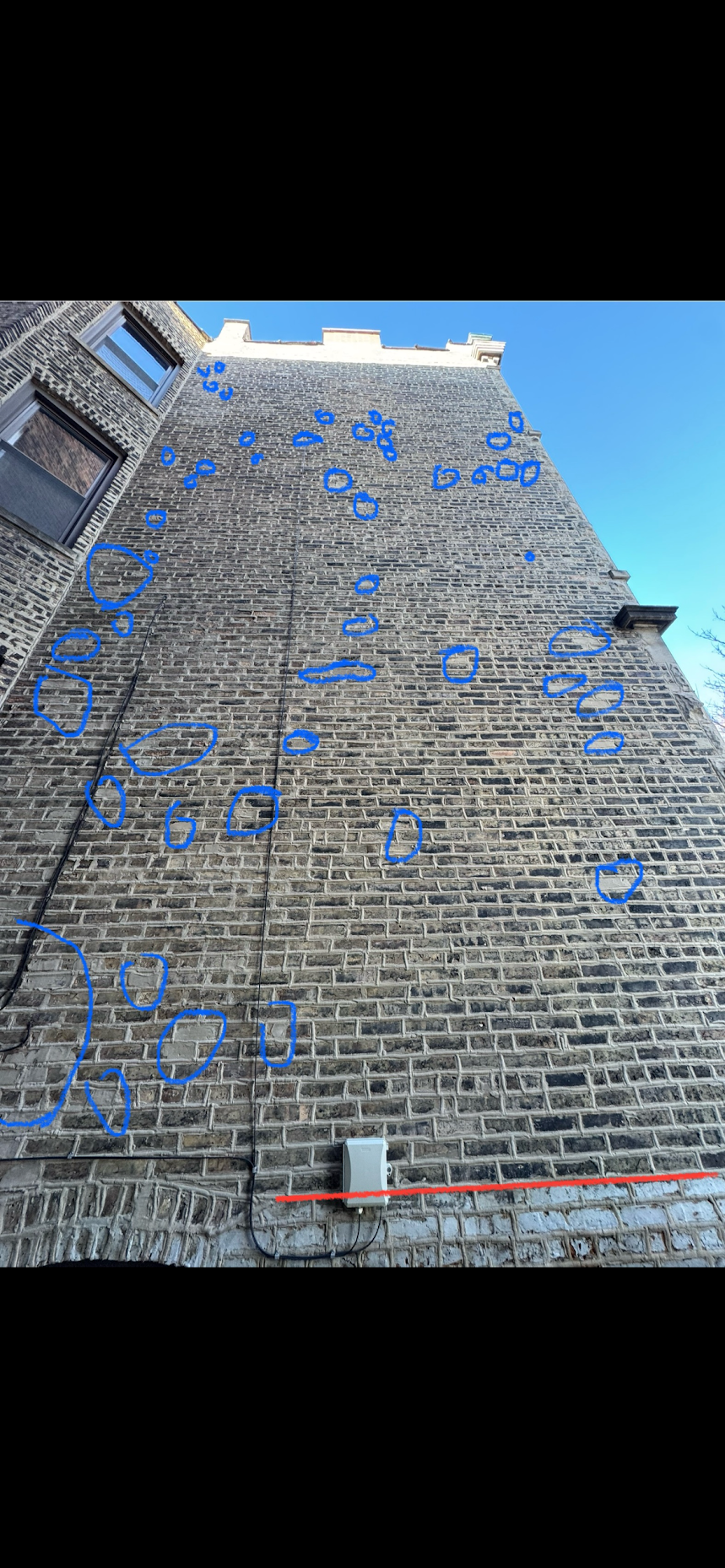
I've had a great experience with Andriy. He was very quick to come by and check out my issues. We walked around the house — 130 years old — and he consulted me on all the issues he saw and things to…
Five masonry trades, one crew — from a single spalled brick to a full facade restoration under the Chicago Facade Ordinance.
Complete rebuilds and restoration for commercial and residential properties.
Learn more
Expert brick installation and repair with attention to detail.
Learn more
Professional caulking services to protect your building from water infiltration.
Learn more
Precise tuckpointing that strengthens and enhances the look of your brick.
Learn more
Protect your building with our reliable waterproofing solutions.
Learn moreMon–Sat 7:00–18:00 during business hours, 24/7 for emergencies.